Continue Reading]]>
The new programme, entitled “Addressing the impacts of the energy crisis in the Republic of Moldova”, is designed to strengthen both the ability of the Government and the energy sector to review and improve core functioning processes and coordination mechanisms. These measures are essential to support Moldova’s efforts to implement key energy reforms, as well as to strengthen institutional capacity to respond to both the current and potential future energy shocks.
The programme will contribute to providing a standard definition for energy poverty in order to build the mechanisms needed to alleviate the energy burden faced by vulnerable groups in the Republic of Moldova.
“In the Republic of Moldova, energy poverty is a national issue that currently affects most of the Moldovans. Around 60% of households spend more than 10% of their budget on energy. This number is likely to increase next winter, as heating season will restart and global gas prices remain unpredictable. The problem of energy poverty, if left unaddressed, threatens to amplify vulnerability, creating long-term effects on Moldovan society and its economy,” noted Marcel Spatari, Minister of Labour and Social Protection.
The programme will also include a large-scale information campaign that will encourage homeowners to replace old home appliances with more energy-efficient models. The campaign will be complemented by the testing of targeted energy-efficient solutions and renewable technologies that can be used in energy-poor households. In addition, several blocks of flats will be equipped with horizontal heating distribution systems, and photovoltaic panel systems will be installed in at least three medical institutions, which will contribute to reducing energy costs.
“The new programme launched today demonstrates the European Union’s strong commitment to support the people of the Republic of Moldova to overcome the energy challenges. This ambitious programme will contribute to the energy security and energy independence of the Republic of Moldova. It will do so by increasing the capacity of the Government, by investing in renewable energy projects and by increasing awareness of the population about energy efficiency and its benefits. It will also have a positive impact on the environment, through the implemented energy efficiency measures,” stated Jānis Mažeiks, Ambassador of the European Union to the Republic of Moldova.
Furthermore, the programme envisages support for the transposition of the EU Third Energy Package into both primary and secondary legislation, as well as a series of Directives and Regulations of “Clean Energy for all Europeans” package, which addresses the energy performance of buildings, renewable energy, energy efficiency, good governance, and the design of the electricity market design.
“The launch of this joint EU-UNDP Programme intended to address Moldova’s current and emerging needs in terms of energy security and resilience is timely and critical. Spillovers from the war in Ukraine are affecting the Moldovan economy through a variety of channels, including a spike in energy prices, trade disruptions, adverse confidence effects and the indirect impact of sanctions. Our recent analysis shows that 60% of Moldova’s population live in energy poverty, spending more than 10% of their budgets on energy bills. The new programme will enable us to engage in the green energy transition by promoting energy efficiency and renewable solutions envisaged by the EU Green Deal,” said Mirjana Špoljarić Egger, UN Assistant Secretary-General, UNDP Assistant Administrator and Regional Director for Europe and the CIS.
The new EUR 10 million programme “Addressing the impacts of the energy crisis in the Republic of Moldova” is a complementary support, in addition to the EUR 60 million, in the form of budget support, as emergency assistance to overcome the energy crisis and EUR 5 million for supporting the vulnerable population affected by the energy crisis, provided by the European Union. It supports the Moldovan public authorities and vulnerable groups in the context of prices’ increase for natural gas, which is leading to chain price escalations.
For more information: Laura Bohantova, Communications Analyst, UNDP Moldova, 068511883, laura.bohantova@undp.org
]]>Continue Reading]]>
In 2012, Vitalie Iarmaliuc launched a briquette production business in Mihăileni village, Rîșcani district, which meant fulfilling a childhood dream for him: „As a child, my imagination was always active in the direction of business ideas. In the evenings, before going to bed, various movies and scenarios with all sorts of business ideas would unfold before my eyes.“
Wishing to try his luck, at the age of 19 he arrived in the United States of America, where he worked in various fields: „America was the land of possibilities also for me, the country where I managed to make my first money and travel. At the time, I was thinking that I wanted to live either in America or in Mihăileni; other locations did not attract me. I still think about those times, but now I am satisfied to manage my own business in Mihăileni and invest all my energy and knowledge here.“
Upon returning to his hometown, Vitalie tested a business idea inspired by the American reality, using the money he earned there. In 2011, he launched a company that produced and delivered frozen culinary products in the region. However, the products sold were not very well known to the local public. Vitalie produced burgers, tacos, burritos, and after a while, the low demand for the products in the northern part of the country led him to close the business.
At that time, many entrepreneurs were purchasing briquette production lines, and Vitalie decided to launch a similar business in Mihăileni, in partnership with a neighbor.
„Initially, people were hesitant to buy briquettes. This is always the case when something new appears on the market. We went through villages and distributed two kilograms of the product to each household, for them to try for free. We also left our phone numbers, but few called. We had mostly the same customers, sometimes they would bring in a relative or neighbor… It took years for us to establish ourselves.“
Although the business partners went their separate ways after a while, Vitalie continued to invest in briquettes.
„Working with briquettes is dirty and complicated, not everyone can handle it,“ says Vitalie, who knows dozens of entrepreneurs who launched this type of business and closed it after a few years. „The machines break down frequently and a specialist on-site needs to be available to repair them immediately, otherwise we lose time and money,“ explains Vitalie.
„I’ve made many mistakes over time. Initially, the position of the equipment caused dust to fly towards the neighbors, we had conflicts often. I had to move everything to avoid disturbing the surrounding households,“ says Vitalie.
Finding qualified employees is another challenge.
„There is a lot of work and the process is physically demanding, which is why there was a high turnover rate among workers. Over the course of seven years, we managed to gather a good team that faces daily challenges with discipline, hard work, and humor. In our team, there is some playful complicity between employees and this makes their work more enjoyable, even if the conditions are not always easy.“
Vitalie Iarmaliuc from Mihăileni village, Rîșcani district
„A lot of raw material is wasted in the fields“
The entrepreneur tries to use all possible sources of agricultural waste in the production process: sunflower husks, straw, sunflower stems and heads, wood, rapeseed, soy, corn stalks, etc.
„There aren’t many briquette producers who want to collect agricultural waste because it’s easier for them to use more convenient raw materials. As a result, a lot of raw material is wasted in the fields.“
Some agricultural lands are offered to him for free to collect waste, while others are available for a fee. Both on a serious note and as a joke, owners ask him when he will collect his „trash“ from the fields, while Vitalie is happy that he can bring warmth to people’s homes.
In 2020, Vitalie received a grant from Switzerland through the UNDP project „Migration and Local Development“, which allowed him to purchase a tractor. Previously, transporting raw materials on the company’s territory was done using wheelbarrows and sheets, which consumed a lot of time and physical effort from the workers.
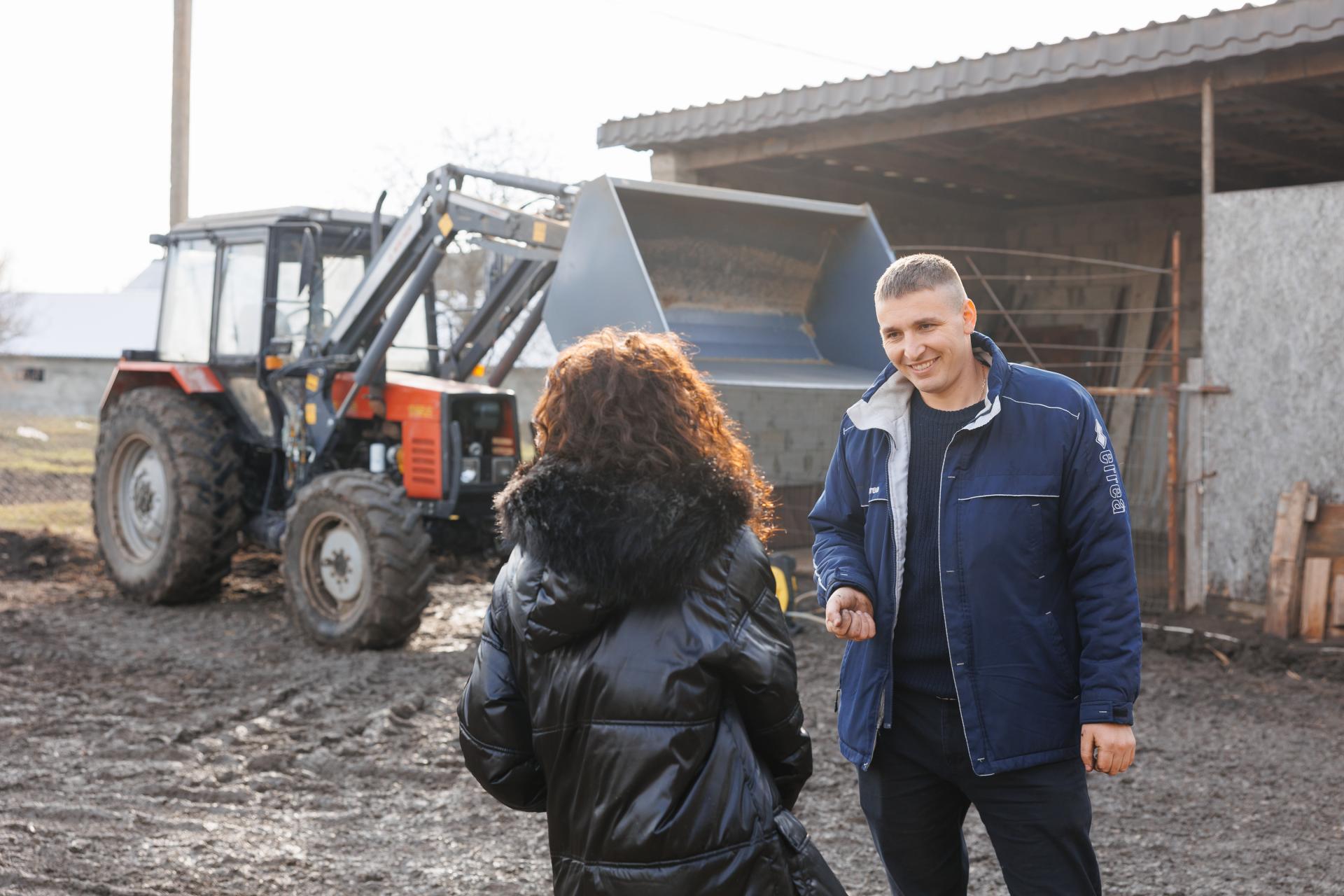
„For many people, this is just a tractor, but for us, it was a lifesaver, a kind of turning point after which work became much easier and faster. Although we also work with many old technologies that we constantly repair because it is cheaper than buying a new production line, new technologies bring some changes and optimizations that revolutionize the work process, and we can produce more within a working day.“
The energy crisis has significantly increased the demand for briquettes
The year 2022 brought multidimensional shocks, including the energy crisis. All of these have shaken all sectors of the economy, except for the alternative heating sources market.
„In previous years, most contracts with legal entities were concluded in the summer-autumn period, while individuals addressed us spontaneously throughout the year,“ says Vitalie.
In 2022, after the start of the war in Ukraine, demand for briquettes from individuals increased considerably: „During this period, we couldn’t even produce enough, as locals and people from other villages would come and buy it directly from the door.“
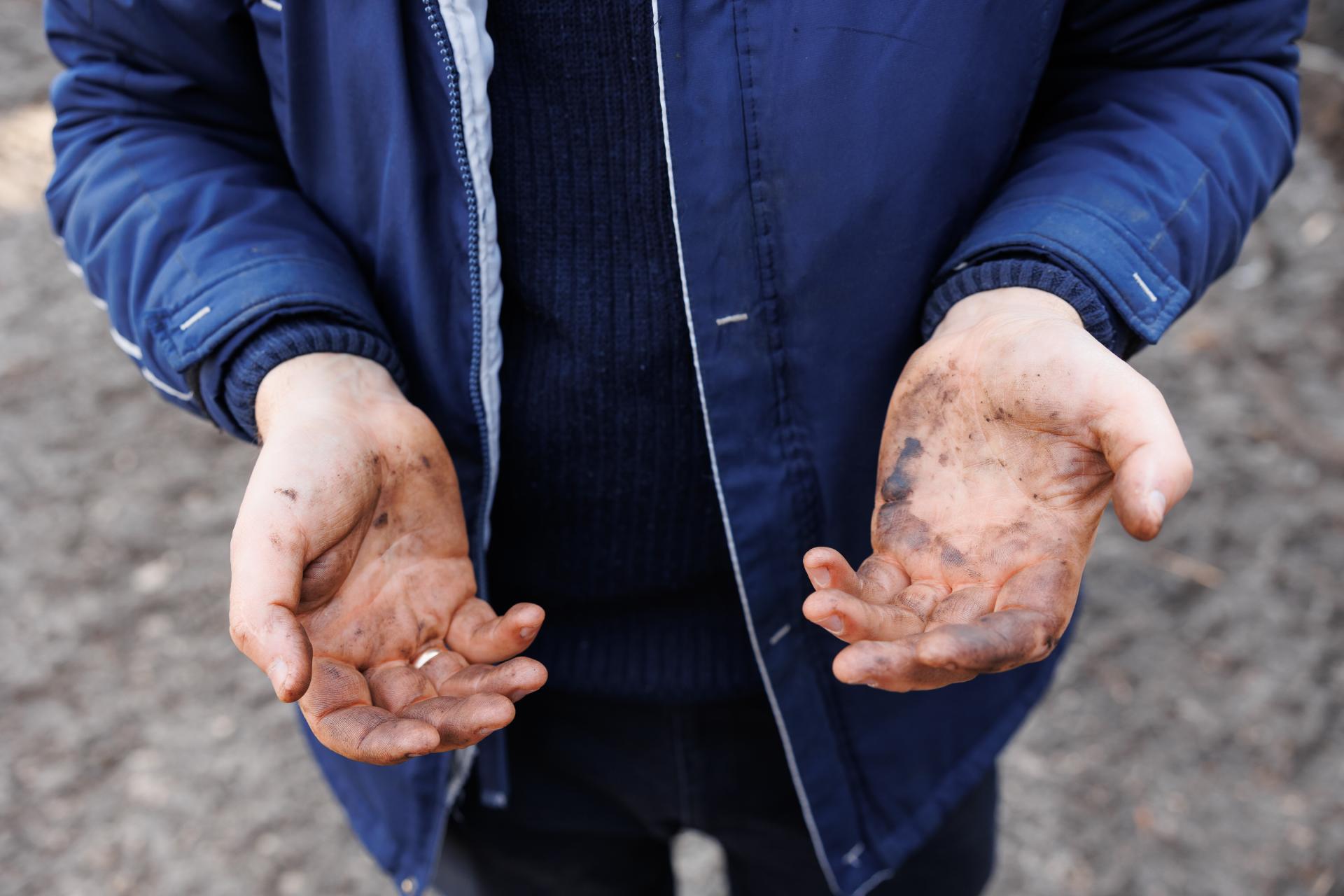
While in other years Vitalie’s company produced around 700-800 tons per year, in 2022 it produced and sold twice as much – 1500 tons. Prices also doubled from March to December 2022. „Prices would be lower if we were allowed to collect agricultural waste from larger areas. Currently, we have access to only 10% of the available land. If briquette producers would collect at least 30%, the available quantity and prices would be different,“ explains the entrepreneur.
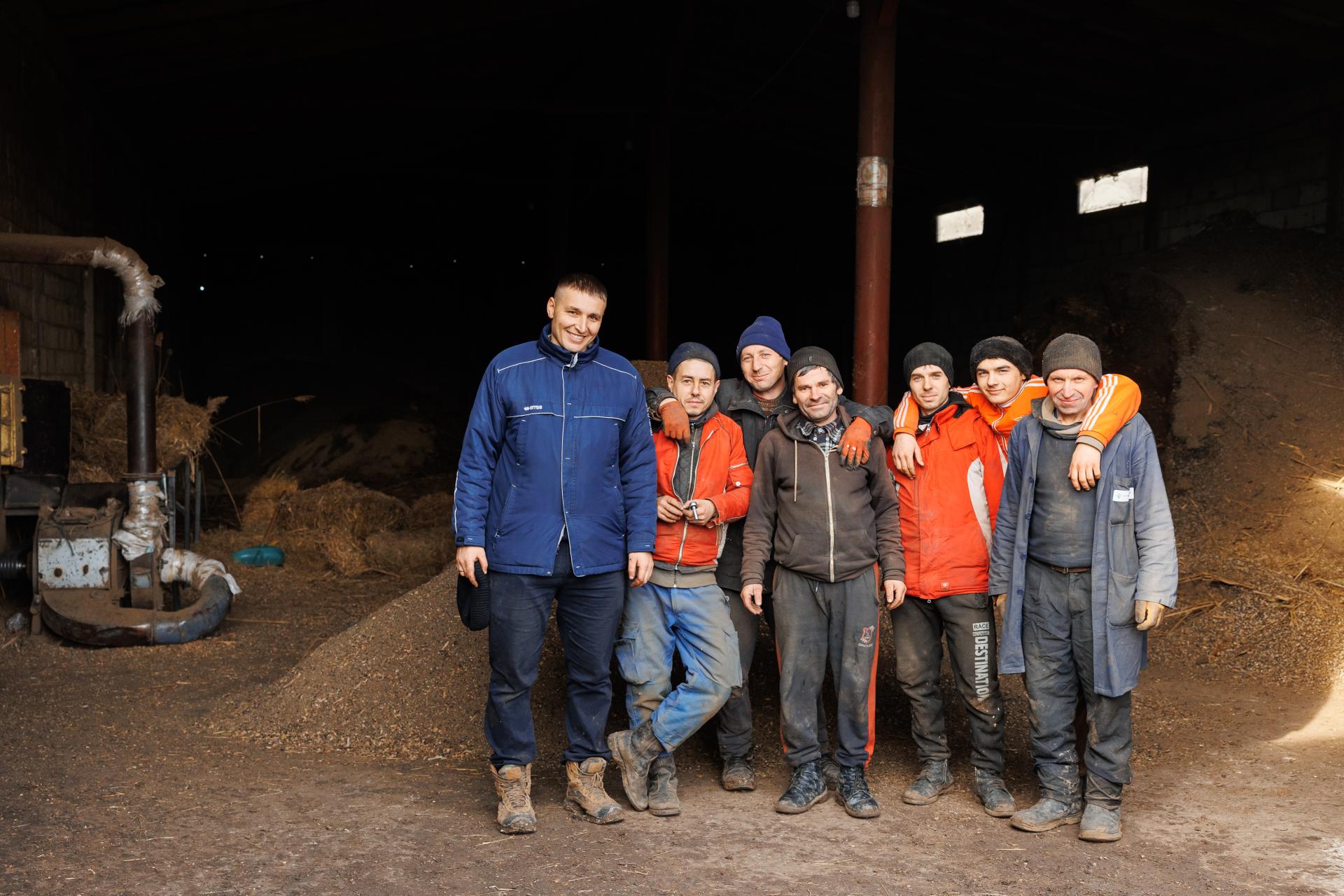
In 2023, Vitalie is cautious with his plans, but wants to expand his business, hire new workers and try to convince landowners to allow waste collection on their land. He does not keep merchandise stocks for a long time, preferring a constant flow of raw materials and products delivered to consumers. He works every day alongside his team, and his hands carry the same signs of hard work as the hands of his employees.
]]>